
News
Dickson Advocates For Inclusion Of SSDC In 2025 Budget

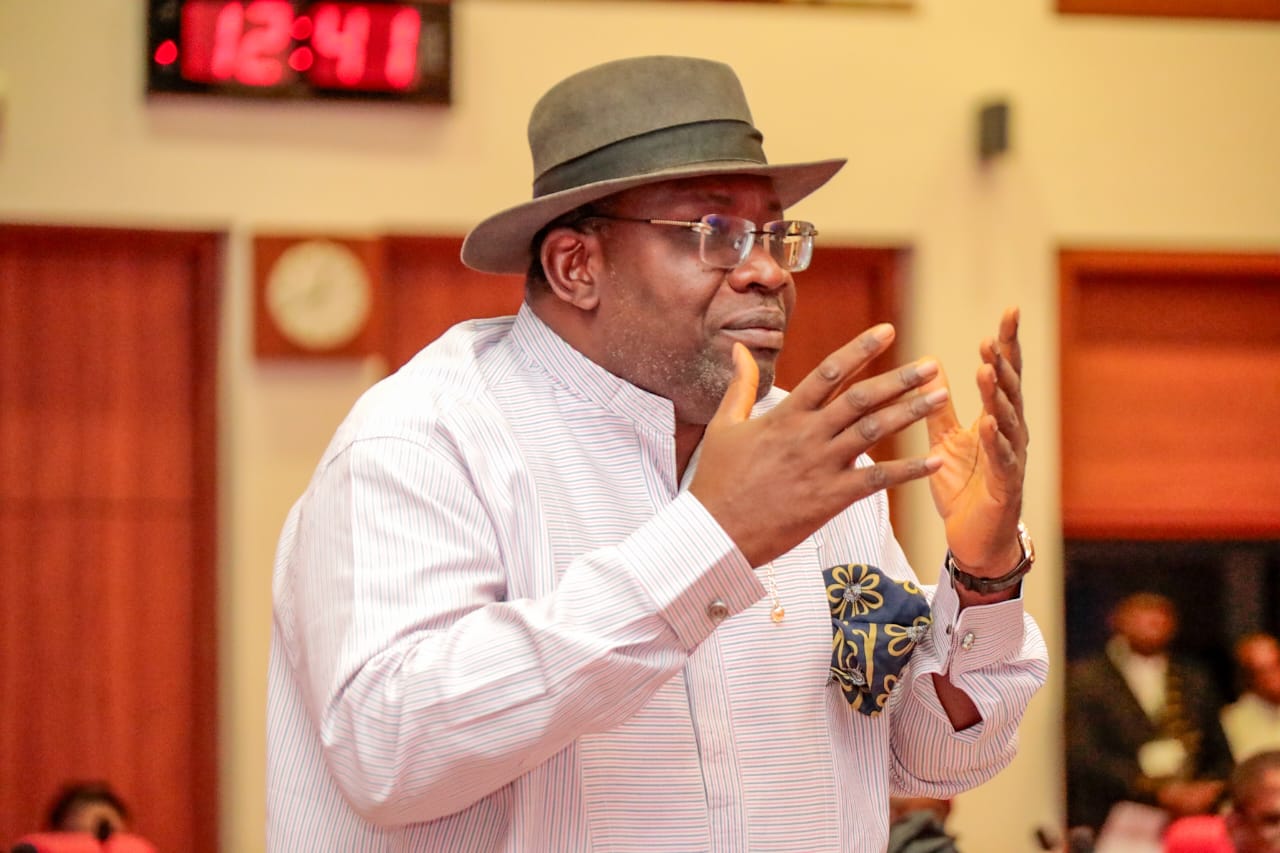
Former Governor of Bayelsa State and Senator representing Bayelsa West Senatorial District, Senator Henry Seriake Dickson, has advocated for the inclusion and funding of the South South Development Commission in the 2025 proposed national budget.
The senator made this known through his official facebook handle, said the exclusion of the South South Development Commission in the 2025 budget, despite the pending assent of the commission as other regional development commissions are included in the national budget.
Senator Dickson following the presentation of the proposed 2025 budget by President Bola Tinubu in the national assembly, stood to express concerns in pertinent areas in the few minutes allocated to each senator to make contributions in the proposed 2025 national budget.
He said the omission of the South South Development Commission in the proposed 2025 budget, should be addressed and corrected before the budget comes into effect or the supplementary appropriation bill by Mr President early next year.
As the Chairman of the Senate Committee on Ecology and Climate Change, the national lawmaker raised the country’s uncoordinated response to climate issues associated with inadequate funding that needs to be properly addressed.
He noted that the budget presents an opportunity for the President as Chairman of the Nigerian Climate Change Council to allocate resources towards the funding of the council that would signal to the global community of the country’s seriousness in addressing ecological challenges.
Senator Dickson highlighted the severe threat of coastal erosion devastating numerous communities, particularly in Bayelsa State, and across the Niger Delta region, adding that the entire ancestral homelands have been lost, and many more are at risk of been erased by the relentless phenomenon overtime.
The statement read in parts: “Following the presentation of the proposed 2025 budget by Mr. President, I stood to express my concerns in the few minutes allocated to each senator.
“As I mentioned, the budget prioritizes critical areas such as strengthening our security forces, investing in education, infrastructure, and healthcare—focus areas that I fully support and identify with.
“However, I urged my colleagues to exercise caution despite the budget’s optimistic outlook, as some of its underlying assumptions warrant closer scrutiny.
“For instance, while we are hopeful about increasing crude oil production to over two million barrels per day, we must also prepare for less favorable outcomes.
“Similarly, while the budget aims to reduce inflation from its current rate of approximately 30% to 15% and lower the exchange rate from about N1,700 per USD to N1,500, these targets, though ambitious, require realistic contingency planning.
“I also brought to the attention of the executive that funding for all other development commissions was provided in the budget, except for the South-South Development Commission.
“This omission, perhaps due to the commission’s pending assent, needs to be addressed. It is my hope that this will be corrected before the budget comes into effect or the supplementary appropriation is made to correct this early next year.
“As Chairman of the Senate Committee on Ecology and Climate Change, I used the opportunity to highlight our country’s uncoordinated response to climate issues and the associated inadequate resource allocation.
“The Climate Act, which has been passed, provides for the activation of the Climate Fund. This budget presents an opportunity for the President, as Chairman of the Nigerian Climate Change Council, to allocate resources towards the fund and convene the Council.
“This would signal to the global community our seriousness in addressing ecological challenges, especially as every region in our country continues to grapple with these pressing issues.
“I made special mention and highlighted the severe threat of coastal erosion, which has devastated numerous communities, particularly in Bayelsa State and across the Niger Delta. Entire ancestral homelands have been lost, and many more are at risk of being erased by this relentless phenomenon.
“Every region of the country faces its own ecological challenges, whether it is desertification in the north, gully erosion in parts of the east, or coastal erosion in the south. These threats, exacerbated by climate change, require urgent attention.
“If we fail to address them comprehensively, the impacts will continue to undermine our development efforts. Yearly investments in infrastructure and other critical sectors will be rendered ineffective as natural disasters destroy them.
~ Hot News Reporters


Bagou Celebrates Gov. Diri At 67, Hails His Remarkable Transformational Leadership

Omo-Agege Joins NDC, Set For Delta Central Senate

IWG Raises Alarm Over Rising Oil Pollution-Related Health Hazards In Bayelsa
Breaking: Ijaw Music Queen, Ikesima Brown, 6 Others Of Barrister Smooth Music Band Dies In Car Accident

Breaking: David Lyon, Nyesom Wike, Magnus Abe, Festus Keyamo, Betta Edu, Others Make Ministerial List
